


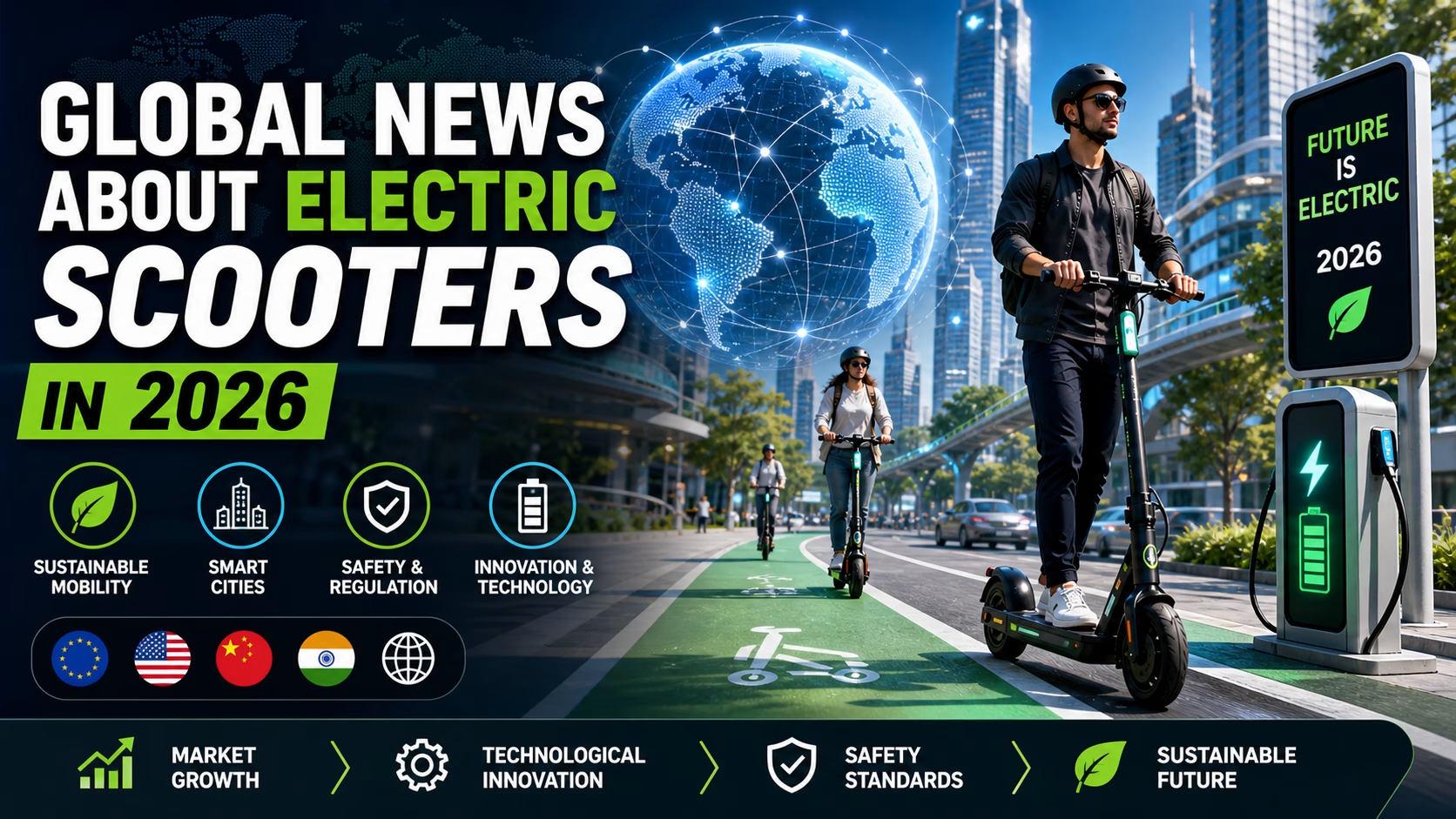

Global news about electric scooters in 2026 reflects a dynamic landscape marked by technological advances, new urban regulations and a growing commitment to sustainable mobility. During this year, electric scooters continue consolidating themselves as a key solution for efficient urban transport, driven by ecological policies, expansion of smart infrastructures and demand for micromobility alternatives.
At an international level, cities in Europe, Asia and America are redefining their transport models through shared mobility programs, safety restrictions and technological improvements in light electric vehicles. The sector’s evolution responds both to market growth and to challenges related to road safety, sustainability and legislative adaptation.
Table of Contents
Global expansion of electric micromobility
The global market for electric scooters maintains accelerated expansion in 2026 thanks to increasing urbanization and the need to reduce carbon emissions. Leading companies in the sector have developed models with greater autonomy, interchangeable batteries and smart geolocation systems.
In Europe, numerous governments strengthen incentives for the use of personal electric vehicles, while implementing stricter regulations for circulation and parking. In Asia, especially in India and China, mass production and adoption of electric scooters continue growing as a response to urban congestion and energy costs.
The United States also maintains its focus on scooter sharing services, although various cities are reviewing regulations after concerns regarding accidents and public space management. Some urban areas have chosen to partially limit licenses or prioritize electric bicycles as a complementary alternative.
New regulations and road safety
One of the central themes in global news about electric scooters in 2026 is regulatory tightening. Various cities have implemented speed limits, restricted zones, mandatory insurance and technological controls to improve safety.
For example, some regions have begun partially replacing shared scooter fleets with electric bicycles due to accident statistics and improper parking issues. This change seeks to balance sustainability and citizen safety.
The integration of artificial intelligence, proximity sensors and advanced braking systems has become a priority for manufacturers seeking compliance with new international regulations.
Technological innovation and sustainability
Technological evolution drives much of the sector’s growth. New electric scooters incorporate lightweight materials, long-lasting batteries and connected platforms that optimize maintenance and shared use.
Sustainability continues being one of the market’s principal arguments, although experts also analyze the environmental impact of production, battery recycling and complete life cycles. As a result, many brands invest in recycling programs, renewable energies and responsible manufacturing.
The rise of green mobility also favors the development of smart cities, where electric scooters form part of integrated transport ecosystems together with public transportation, bicycles and autonomous vehicles.
Economic impact and future of the sector
Global news about electric scooters in 2026 also highlights corporate mergers, new investments and expansion into emerging markets. The micromobility industry positions itself as a strategic component within the global energy transition.
Forecasts indicate that the sector will continue growing, driven by young consumers, climate policies and advances in urban infrastructure. However, success will depend on balancing innovation, profitability and social acceptance.
Secondary keywords such as urban mobility, sustainable transport, electric vehicles, micromobility, road regulation and smart cities strengthen SEO positioning of the topic within the technological and ecological sectors.
Conclusion
Global news about electric scooters in 2026 demonstrates a profound transformation in modern mobility, where technological innovation, sustainability and regulation converge to redefine urban transportation on a global scale. The rapid evolution of electric scooters is not only changing how people navigate cities, but also influencing public policy, infrastructure development and environmental strategies.
As governments continue implementing stricter safety regulations and manufacturers invest in smarter, more efficient technologies, the electric scooter industry is becoming a fundamental pillar of future transportation systems. From expanded battery performance to integrated smart city networks, these vehicles represent more than a temporary trend—they symbolize a broader shift toward cleaner, more adaptable and accessible mobility solutions.
As governments, companies and consumers increasingly embrace micromobility solutions, electric scooters are expected to maintain their strategic role in creating greener, smarter and more connected cities worldwide. Their continued growth reflects a global commitment to sustainable transport and signals a major step forward in the transition toward environmentally responsible urban mobility.
