


Table of Contents
Choosing between an electric scooter and a traditional scooter in Spain can influence your daily commute, travel flexibility, and overall urban experience. Both options serve as popular personal mobility solutions — whether you’re navigating city streets, exploring neighborhoods, or enjoying coastal promenades. Understanding their differences, costs, pros and cons, and real-life practicality will help you decide which scooter type offers better value and performance in the Spanish environment.
This article compares electric scooters and traditional scooters in Spain across key categories including cost, convenience, safety, regulations, and lifestyle to determine which is truly worth it for riders in urban and tourist settings.
What Is an Electric Scooter vs. a Traditional Scooter?
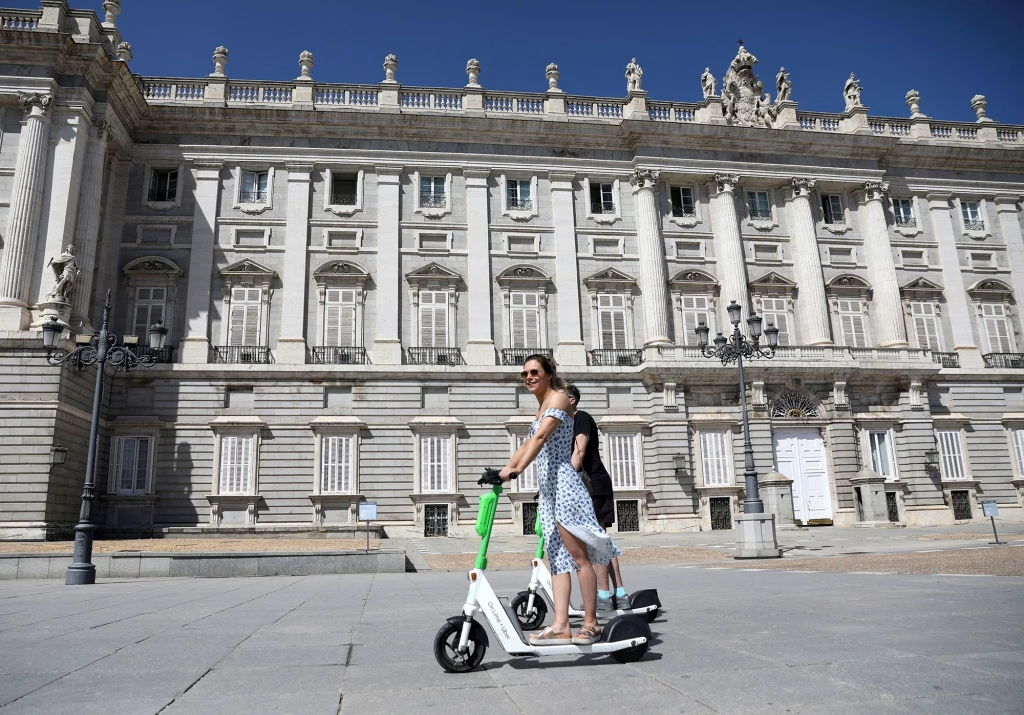
An electric scooter is a battery-powered vehicle with a motor that assists or fully propels the rider without kicking. These scooters have grown in popularity across Spanish cities such as Madrid, Barcelona, and coastal areas like the Costa del Sol due to their convenience, speed, and eco-friendly advantages.
In contrast, a traditional scooter strictly relies on the rider’s physical effort — usually a kick push — for forward movement. Also known as kick scooters, they appeal for their simplicity, lightweight frame, and fitness benefits.
Although both share visual similarities, their mechanics and user experiences differ significantly, leading to different advantages depending on rider needs and environment.
Performance and Ease of Use
Electric scooters excel in performance. A battery-powered motor provides continuous propulsion, allowing riders to maintain speed without physical exertion. This makes them ideal for commuters in hilly cities, longer distances, or for riders who prioritize comfort over effort.
On the other hand, traditional scooters require continuous kicking for motion. While this promotes fitness and offers a sense of physical involvement, it may feel tiring over long distances. In urban environments like narrow Spanish streets or flat promenades, some riders may prefer the simplicity of kicking.
Overall, if ease of use and longer distance travel are your priorities, electric scooters deliver better performance compared to traditional scooters in Spain.
Cost Comparison: Purchasing and Operating
One of the most noticeable differences lies in cost.
Traditional scooters are inexpensive to buy and maintain. Entry-level models can start as low as €30–€60, while quality urban kick scooters may range up to €100–€150. The only ongoing cost tends to be occasional maintenance like bearings or replaced wheels.
In contrast, electric scooters have higher upfront costs — typically €300 to €900 for consumer models and €1,000+ for premium brands. Additionally, riders must account for battery replacement over years and periodic servicing. On the positive side, electric scooters do not require fuel and have minimal “operational” costs beyond occasional charging.
When comparing value in Spain, traditional scooters offer the lowest cost of ownership, while electric scooters justify their price through convenience and performance.
Convenience and Daily Use
Electric scooters provide significant convenience. You can travel longer distances with little effort, and modern battery technology delivers reliable ranges between 15–40 km per charge. Many riders use electric scooters for commuting, campus navigation, or exploring city districts without needing public transport.
Traditional scooters shine in portability. They are lighter, foldable, and easy to carry upstairs or onto public transit. They require no charging infrastructure, so spontaneous use is effortless.
If your daily routine involves medium-to-long distances or frequently changing terrains, electric scooters may be worth it. If your priorities are lightweight mobility and zero maintenance demands, traditional scooters retain an edge.
Safety, Regulations, and Urban Compatibility in Spain
Both scooter types must be used responsibly, but electric scooters are subject to specific safety regulations in Spain. Most cities require riders to obey speed limits, use bike lanes where available, and avoid sidewalks. In many municipalities, wearing a helmet is strongly recommended and often mandatory depending on local law.
Traditional scooters, because of their lower speeds and manual operation, face fewer regulatory restrictions — but safe riding practices still apply, including visibility gear and awareness of pedestrians.
In urban hubs such as Barcelona and Madrid, and popular destinations like the Costa del Sol, city councils have designated zones and rules specifically for electric scooters. Riders must stay informed to avoid fines.
Which Scooter Is Worth It for You?
- Urban Commuters: Electric scooters are generally worth it due to speed, range, and reduced physical effort.
- Occasional or Short Rides: Traditional scooters may be more practical, especially if cost and simplicity are priorities.
- Tourists in Spain: Electric scooters rented locally offer excellent convenience for sightseeing, especially in areas with long promenades like beaches or waterfronts.
- Budget-Conscious Users: Traditional scooters provide mobility without financial commitment or charging concerns.
Ultimately, neither option is universally “better.” Your choice depends on lifestyle, distance needs, budget, and local infrastructure.
Conclusion
In Spain’s evolving urban mobility landscape, both electric scooters and traditional scooters have strong roles. Electric scooters deliver power, ease, and longer rides, while traditional scooters offer affordability, simplicity, and fitness benefits. Choosing between them requires weighing cost versus convenience, daily travel demands, and regulatory environments.
Whether you choose an electric scooter or a traditional scooter, both enhance personal mobility and contribute to a more flexible urban experience in Spain’s cities and coastal regions.
