


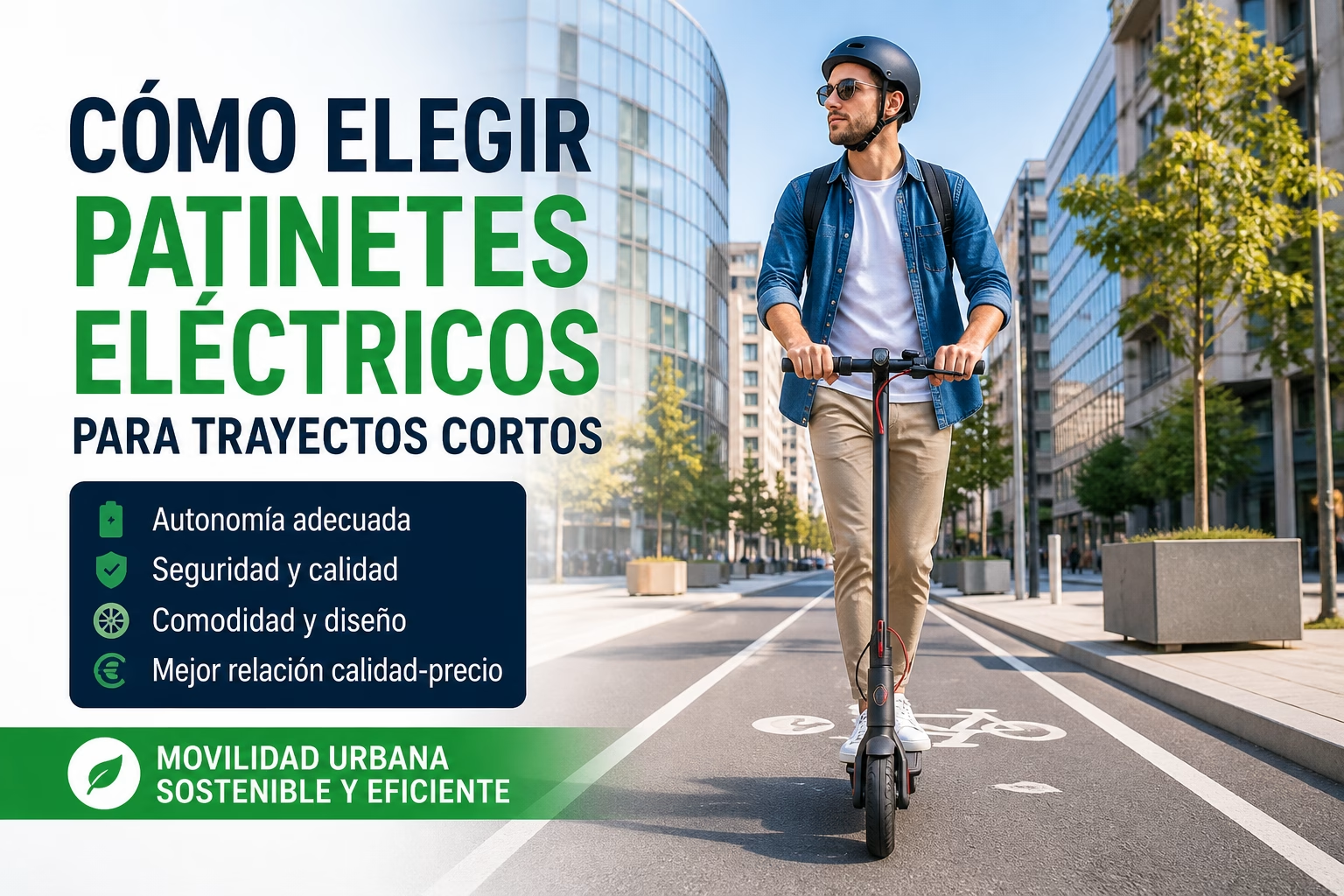

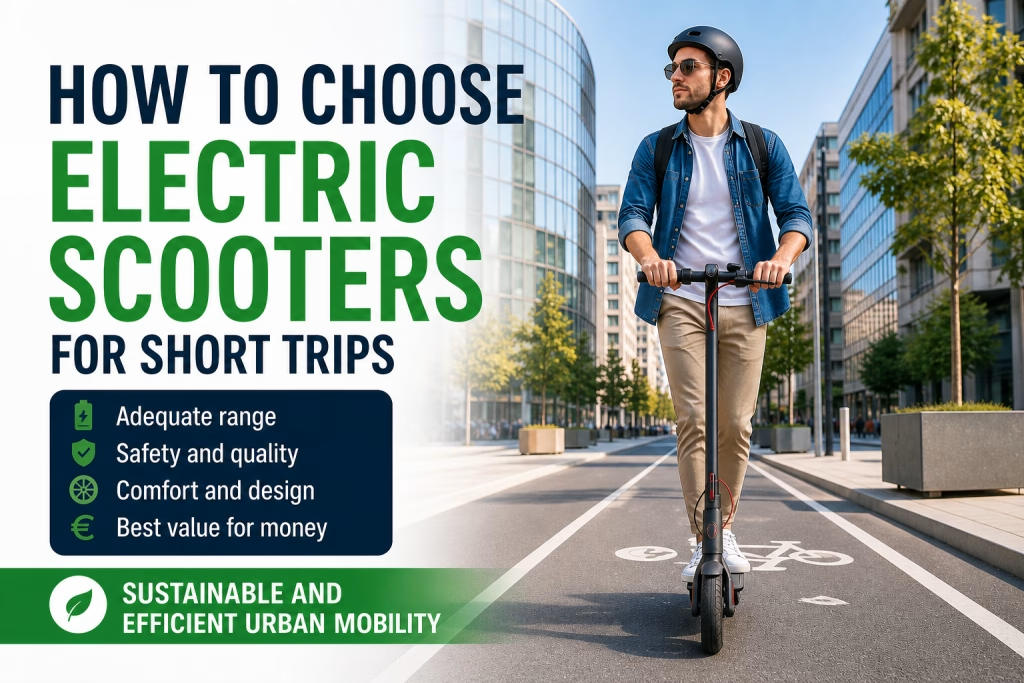
How to choose electric scooters for short trips is one of the most relevant questions for those seeking a practical, economical, and sustainable alternative for moving around urban environments. In Spain, the use of electric scooters has grown notably thanks to their ability to reduce travel times, minimize transportation costs, and offer an ecological solution compared to car use. However, the wide variety of models available makes it essential to understand the key factors before making a purchase. Choosing correctly involves analyzing autonomy, power, safety, comfort, current regulations, and value for money to ensure a profitable investment adapted to daily needs.
Fundamental factors for choosing electric scooters for short trips
When evaluating how to choose electric scooters for short trips, it is essential to define the type of use it will have. For daily urban travel, such as going to work, attending classes, or making quick journeys within the city, the scooter should offer efficiency without incorporating unnecessary features that increase the product’s cost. Autonomy is one of the first aspects to consider, since for short trips, a capacity of between 20 and 40 kilometers is usually sufficient. This distance allows regular routes to be covered without constant recharging, improving convenience and reducing concerns related to the battery.
Additionally, maximum speed plays a determining role. In Spain, regulations limit personal mobility vehicles to 25 km/h, so choosing models that remain within this range guarantees legal compliance and safety. For most urban users, this speed is more than adequate, providing sufficient quickness without compromising stability or autonomy.
Motor power and urban performance
Another essential element when analyzing how to choose electric scooters for short trips is motor power. For routes on mostly flat surfaces, motors between 250W and 350W are usually sufficient. These offer an appropriate balance between energy consumption, performance, and price. In cities with hills or frequent slopes, it may be more advisable to choose 500W motors, as they offer better response on inclines and greater acceleration capacity.
Motor performance directly influences the daily riding experience, especially when stability and efficiency are required for constant urban trips. However, choosing excessive power for basic needs can result in a higher cost without providing significant benefits.
Portability, foldable design, and comfort
Portability is especially important for those who need to combine the scooter with other means of transportation, such as metro, train, or bus. In this sense, foldable and lightweight models offer a considerable advantage. A weight between 12 and 15 kilograms usually represents the ideal balance between structural strength and ease of transport.
Design also influences comfort. A wide base, ergonomic handlebar, and simple folding system can make a significant difference in daily use. Urban users especially value models that are easy to store in offices, small homes, or reduced spaces.
Safety as a priority criterion
When studying how to choose electric scooters for short trips, safety should not be considered secondary. Braking systems are one of the most important components, with models that incorporate disc brakes, regenerative braking, or dual braking systems being preferable. These mechanisms significantly improve response capacity in unexpected situations.
Likewise, adequate lighting through front and rear LED lights, together with side reflectors, increases visibility in nighttime or low-light conditions. Pneumatic tires also provide greater stability and comfort, especially on irregular urban surfaces, while quality suspension reduces vibrations and improves the riding experience.
Spanish regulations and legal compliance
Regulations in Spain regarding personal mobility vehicles require attention to certain legal requirements. Electric scooters must respect speed limits, circulate only in permitted areas, and comply with possible homologation requirements. Choosing a model adapted to these regulations avoids sanctions and guarantees safe and responsible mobility.
Additionally, knowledge of local regulations is essential for those who wish to use the scooter as a regular means of transportation, since certain cities may impose additional rules.
Value for money and durability
Although price is usually a decisive factor, understanding how to choose electric scooters for short trips involves valuing much more than the initial cost. An economical model but manufactured with low-quality materials can generate higher repair and maintenance expenses in the medium term. Therefore, it is advisable to choose recognized brands that offer warranties, technical service, and spare parts availability.
Investing in quality usually translates into greater durability, better performance, and a more satisfactory user experience. Reviews from other users and specialized comparisons can be very useful tools for making an informed decision.
Conclusion
Understanding how to choose electric scooters for short trips requires carefully analyzing aspects such as autonomy, power, speed, safety, portability, regulations, and manufacturing quality. The ideal choice will be one that precisely adapts to the user’s needs, offering efficiency, comfort, and legal compliance. A well-selected electric scooter not only optimizes daily urban mobility but also represents an intelligent investment toward a more sustainable, economical, and modern lifestyle.
